How to plan a backpacking trip
- Tess Adele Toldhwoss

- Mar 17, 2023
- 6 min read

So, you want to go backpacking? Maybe you’re wanting to get out of the house and into the outdoors, but you don’t know where to start. You’ve landed yourself in a good place because here I’ll outline how to pick and plan your route, prepare your gear list, and set up your trip itinerary. This is by no means an exhaustive list, but it includes my best tips on how to plan a backpacking trip.
Have you gone backpacking before?
No, I want to
No, I'm not interested
Yes, a few times
Yes, many times
Picking a place
The first step to planning any backpacking trip is choosing where you want to go, which trail(s) you’ll hike, how many miles you will cover and how many days you’ll be gone.
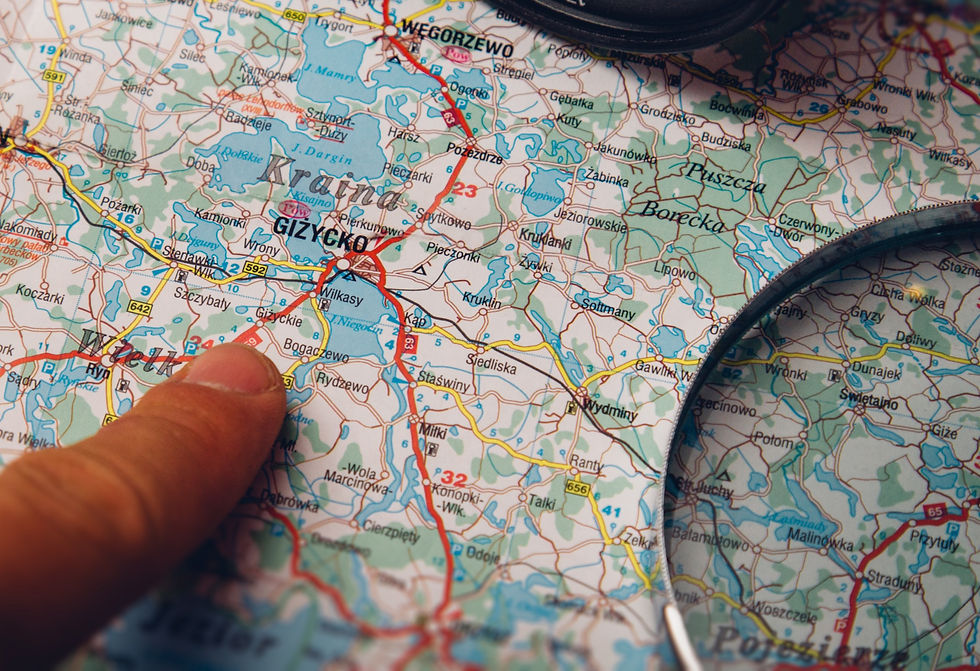
Is there a nearby State Park with a mountain you can hike around? Or is there a National Forest the next county over for you to explore? Or maybe there's a trail to a local hotspring that you can enjoy.
A good place to start looking for trip locations is AllTrails and a quick google search of backpacking trips in your area can also do the trick. Be aware that not all trail information on the internet is accurate and up to date, so double check your resources with the website of the land agency in charge of the area you wish to visit.
If you're planning your first trip out, it may be helpful to choose an area that is already relatively familiar to you. New skills can be easier to learn if you’re not also trying to navigate an unfamiliar landscape.

If there are no trails you know and you choose an unknown area, try to look for terrain that is inside of your comfort zone. Backpacking can be a strenuous and exhausting activity and being aware of your physical limits when planning a trip is vital to having a happy and healthy time.
Once you’ve identified the general area or trail system you plan to backpack and you are ready to plan your route, build your map on
CalTopo. If you already have an idea of where you want to g,o CalTopo can be a great first place to search for trails too. Jjust input the location's name into the search bar and see the land information for that area. The site offers a mapping tool that will help you to find which trails connect, what campgrounds are along the way and view the trail terrain.
Types of backpacking routes
The trail(s) you choose may form one of a few variations of routes.
Out and back
As the name infers, an out and back trail is one where you hike out from the trailhead to one point further on the trail, from where you turn and hike right back the way you came.
Loop
A loop trail will have you start and end at the same point like an out and back, but instead of hiking back the way you came the route takes you in a loop, with portions of the beginning and end being the same.
Thru hike
A tthru hike is often less trafficked and more complicated. On a thru hike you’ll travel from point A to B, without traveling back. This hike is often preferred when backpacking over long distances or over long periods of time. When doing a thru hike, a plan is made to arrange both drop off at the entrance location and a pick up at the exit. This part involves someone not on your trip to help you, so search through your contact list to find the person who won’t mind dropping you off and picking you back up when you’re smelly and dirty.
Creating an emergency plan
While you may feel safe and secure in your outdoor skills, it is smart to always make an emergency plan with a loved one. In case anything were to go wrong on your trip, it is in your best interest to have a plan already in place.
You may find that you already have an emergency plan that works for you. To help you check yours, here is an emergency plan that works for me:
Choose one person as the Point of Contact, this person agrees to act out this plan in case of an emergency
Communicate a date and time when they should expect to hear from you
Choose a second time where if they have not heard from you by that point, they will continue with the emergency plan
Research and record the Park Ranger’s or Land Manager’s phone number to call to report you and/or your party missing
Share you itinerary with your Point of Contact so that they may share it with those who need it
For example, if I go on a backpacking this weekend and I would tell my mom that I plan to be back at my car by 1 pm Sunday afternoon. One o’clock rolls around and my mom hasn’t heard from me. While she is nervous, she sits and waits until 4 pm when our buffer window ends and she begins to enact our emergency plan. She will call the Park Ranger to alert them that I have missed my check in window and that sometthing is wrong. On the call she will give them a description of me and the locations of each of my campsites.
While an emergency plan may make backpacking feel dangerous or scary, it functions just as emergency water or food storage does. Even if it hasn't been used, the emergency precautions are still kept around, just incase.
Planning your pack
Every trip outdoors requires some gear. If you don’t have all or any of these things, don’t fret. Many sporting goods stores have begun renting out all types of gear for many different sports. Additionally, if there is a college or university near you, check if they have a gear rental program for community members. Nowadays even libraries are beginning to rent outdoor gear to the public.
A pack between 65 and 75 liters should be the right size to fit all of the gear you need.

Backpacking stoves are smaller and more portable than traditional camping stoves. Instead of using propane, most use butane canisters.
Depending on where you’re going, you may need a water filtration system. To check the status of potable water along your route, either check the park website or call a Park Ranger.
On the topic of water, you should be drinking about one liter every two hours. Be ready with ether a water bottle or bladder to sip from throughout your trip.
Be sure to never forget your utensils, bowl and mug, but if you forget you can always eat from the pot and use your fingers. Maybe use some handwash first.
The outdoors is the easiest place to find a bathroom. Just move 200 feet from any water source or campsite, dig a hole at least 6 inches deep, do your business and throw in your toilet paper all before burying it back up. Some places may have different waste requirements, so double check with the Park Ranger before heading out.
When it comes to sleeping pads, you can choose between pads of varying R-values and thickness. The higher the R-value, the more cold resistant the pad is and the lower the R-value, the less cold resistant the pad is. The thicker the pad, the further your body will be from the ground so side sleepers may prefer pads of greater thickness.

Almost any sleeping bag is good. If you already have a bag, pull it out, dust it off and use that one. If not, look for a sleeping bag in the temperature range you’re looking for, a 30 degree bag works well for most backpacking situations. Just don’t forget your stuff sack to fit your sleeping bag into.
Always bring a headlamp. Getting lost outside because you forgot to bring a light can make the trip feel quite dim.
When backpacking, you can't use any old tent. Instead, you’ll have to find a low weight and compact tent that can fit snuggly into your pack.
Bring a first aid kit. Always. It’s better to be safe than sorry.
Pack enough food to cover the duration of your trip. Plan to eat three meals a day and two snacks. Don’t forget the snacks, they become the best relief during a hard hike on the trail.
Before you go, test out and check your gear to make sure everything works properly and to give yourself a handle on how to use them before you find yourself confused in the field.
Prepare to practice Leave no Trace
Anytime we step into the outdoors, we must keep in mind the potential impacts of our presence on the land. In order to minimize the more harmful impacts we leave on nature, the Center for Outdoor Ethics adopted knowledges from Native communities to create the 7 principles of Leave No Trace.
|
2. Travel and Camp on Durable Surfaces |
3. Dispose of Waste Properly |
4. Leave What You Find |
5. Minimize Campfire Impacts |
6. Respect Wildlife |
7. Be Conciderate to Others |

While this is not an all encompassing guide on how to backpack, I hope you were able to gain some tips and advice to plan for your first or next trip. Happy exploring!

Comments